ThruPlay
Meta's video-view event: a play watched to 15 seconds, or completed if the video is under 15 seconds.
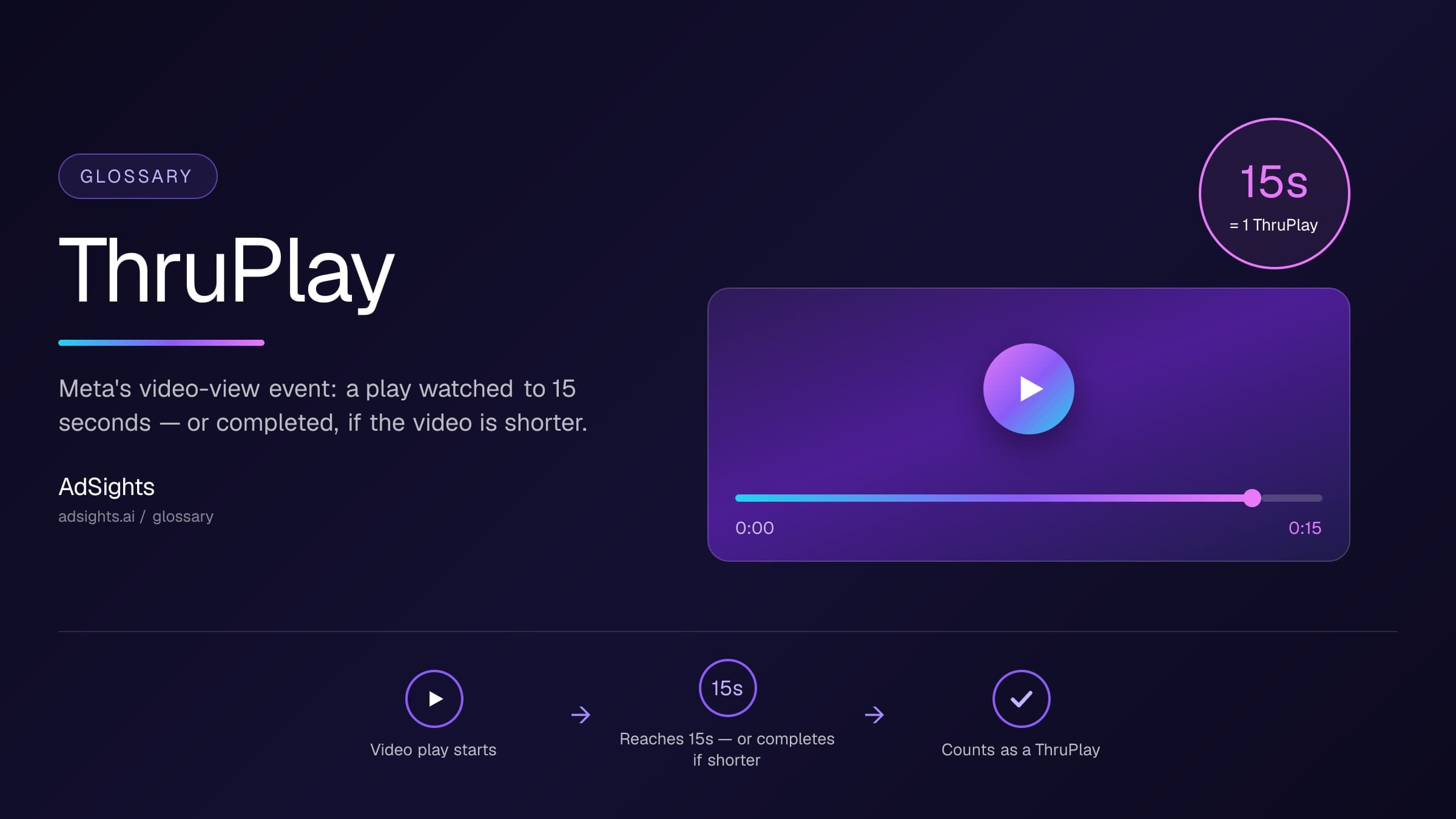
Definition
ThruPlay is Meta's standard video-view event, counted when a viewer watches a video to 15 seconds — or to completion if the video is shorter. It is both a reported metric and a biddable optimization/billing event, and it replaced Meta's retired 10-second video view. ThruPlays ÷ video plays gives the ThruPlay Rate; spend ÷ ThruPlays gives Cost Per ThruPlay. The term is Meta-specific.
Examples
A 12-second ad earns a ThruPlay every time a viewer watches it to the end
A 45-second ad earns a ThruPlay only from viewers who reach the 15-second mark
10,000 video plays and 2,000 ThruPlays means a 20% ThruPlay Rate
Calculation
How to Calculate
A ThruPlay is counted per qualifying play — 15 seconds of watch time, or full completion for videos shorter than 15 seconds. It is a count (and an optimization event), not a rate: divide ThruPlays by video plays for the ThruPlay Rate, or divide spend by ThruPlays for Cost Per ThruPlay.
Formula
ThruPlays = plays reaching 15s (or completed, if the video is under 15s)Operation Type
basic
Formula Variables
Comparison
Related Metrics
Click-Through Rate (CTR)
Click-Through Rate (CTR) measures the ratio of clicks to impressions for a digital advertisement, email, or other clickable content. It's a fundamental metric for evaluating creative relevance, audience targeting quality, and overall ad effectiveness in driving user engagement. CTR varies significantly by format, placement, and channel, making context crucial for performance evaluation.
Reach
Reach measures the total number of unique users who have been exposed to an advertisement at least once during a campaign period. This metric is fundamental for understanding campaign scale, audience penetration, and the efficiency of media spend in accessing target audiences. Reach can be measured at various levels including campaign, platform, and total brand reach.
Engagement Rate
Engagement rate measures the share of an audience that interacted with content, calculated as (total engagements ÷ followers, reach, or impressions) × 100. Engagements typically include clicks, likes, comments, shares, saves, and reactions. The denominator definition varies by platform and report — always confirm which one a benchmark uses before comparing numbers.
Video Completion Rate (VCR)
Video Completion Rate measures the percentage of video ad impressions that are watched to 100% completion. This metric helps evaluate creative engagement, message delivery effectiveness, and audience targeting accuracy while accounting for video length and placement quality. VCR is particularly important for brand messaging where full creative viewing is crucial.
Cost Per View (CPV)
Cost Per View measures the average cost of a qualified video view, with platform-specific definitions of what constitutes a billable view. Common view criteria include watching 2-30 seconds, 50% of video in view for 2 continuous seconds, or user-initiated plays. This metric helps evaluate video ad spending efficiency and compare performance across platforms, formats, and campaigns.
View Through Rate (VTR)
View Through Rate (VTR) most commonly measures the share of ad impressions that become platform-counted views: VTR = (counted views ÷ impressions) × 100, with YouTube TrueView counting a view at 30 seconds or completion. In attribution contexts, VTR instead means the share of impressions that led to a conversion without a click. Always confirm which meaning a report uses.
Thumbstop Rate
Thumbstop Rate measures the effectiveness of creative in capturing attention by tracking the percentage of users who stop scrolling to engage with the content in their feed for a meaningful duration, typically 2-6 seconds depending on the platform.
ThruPlay Rate
ThruPlay Rate measures the percentage of video plays where users watch either the entire video (for videos under 15 seconds) or at least 15 seconds (for longer videos). This is the denominator Meta reports against; on Meta, autoplay keeps video plays ≈ impressions. The metric evaluates content's ability to maintain viewer attention and deliver complete messages, particularly important for platforms like Meta and TikTok.
Hold Rate
Hold Rate measures how well a video ad retains the viewers it has already hooked — the share of 3-second video views that go on to reach 15 seconds (or completion for shorter videos). Where Hook Rate (Thumbstop Rate) judges the open, Hold Rate judges the middle: it isolates whether the body of the ad earns continued attention after the scroll-stopping first frames, normalized to the audience that actually started watching rather than to total impressions.
Cost Per ThruPlay
Cost Per ThruPlay measures the average cost to achieve a ThruPlay, which is either a complete video view for content under 15 seconds or a 15-second watch for longer videos. This metric helps evaluate the efficiency of video ad spending in delivering complete messages to viewers.
Impressions
Impressions measure the total number of times an advertisement is shown to users, regardless of whether they interact with it. Each time an ad appears on a screen counts as one impression, though viewability standards may require minimum exposure duration or percentage in view to count as a valid impression.
Share of Voice (SOV)
Share of Voice quantifies a brand's presence and visibility in the market compared to competitors or total market activity. It measures relative market presence across paid advertising impressions, organic social media engagement, PR mentions, and other trackable communications channels. SOV helps evaluate competitive position and communication effectiveness.
Frequently asked questions
Common questions about ThruPlay, answered.
