Completion threshold
VCR
100% of video length (or platform-defined "completed view")
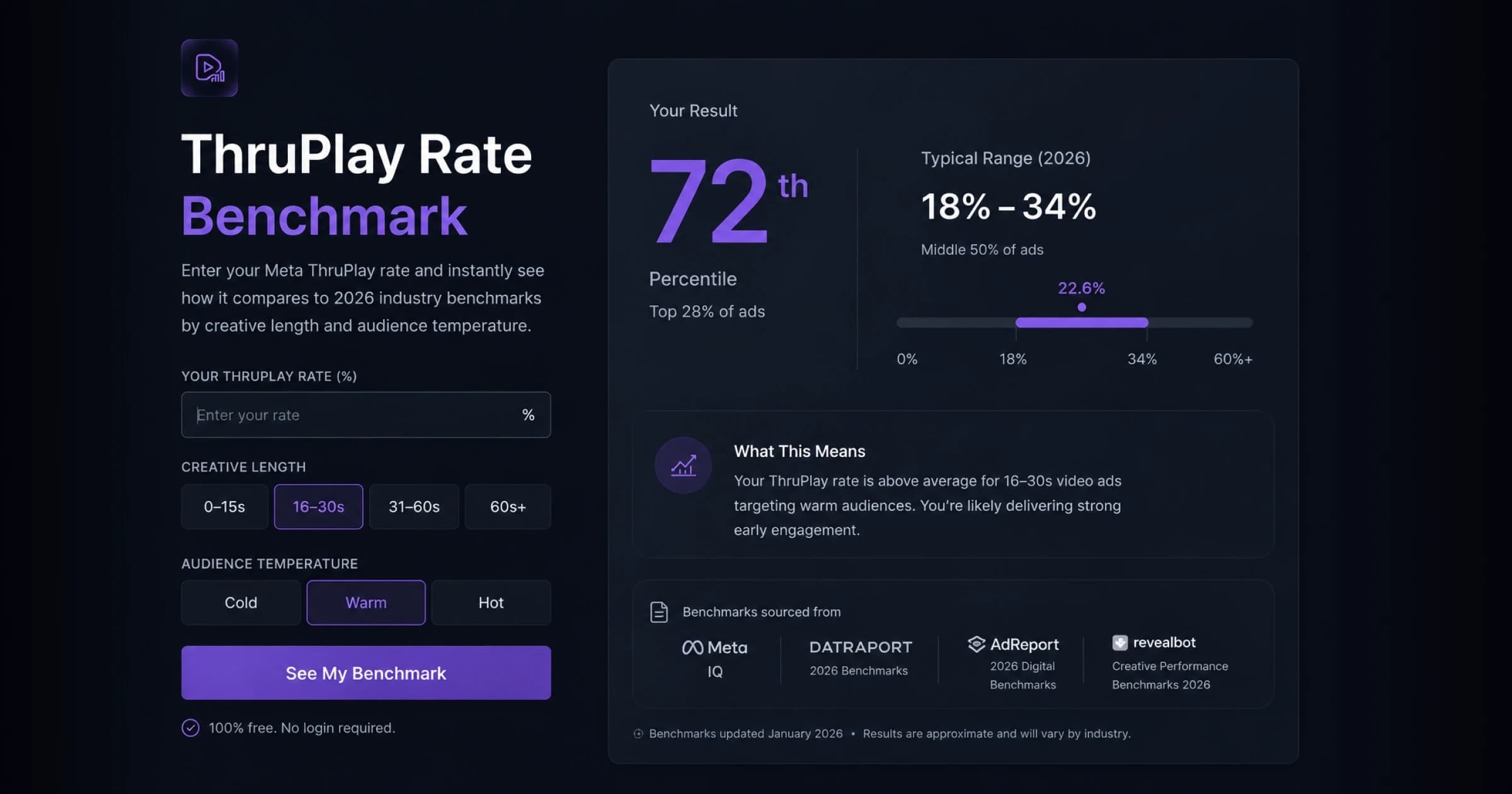
ThruPlay Rate
15 seconds watched OR full completion if video is under 15 seconds
Metric Comparison
Percent who finish the video vs platform ThruPlay engagement threshold.
Video Completion Rate (VCR) and ThruPlay Rate both measure how much of a video people watch, but they use different completion thresholds and platform conventions. VCR typically means completed views divided by starts or impressions. ThruPlay is Meta's billing/optimization metric: 15 seconds watched or full completion on shorter assets.
Quick takeaway
Use VCR when Evaluating whether viewers reach the end of longer explainer or demo videos. Use ThruPlay Rate when Optimizing Meta campaigns toward ThruPlay or cost per ThruPlay.
VCR
The percentage of video ad impressions where users watch to completion (100%).
VCR = (Complete Views / Video Starts) × 100
ThruPlay Rate
Percentage of video plays that result in complete views or 15-second watches.
(ThruPlays / Video Plays) × 100
VCR
100% of video length (or platform-defined "completed view")
ThruPlay Rate
15 seconds watched OR full completion if video is under 15 seconds
VCR
Often video plays/starts; sometimes impressions (verify source)
ThruPlay Rate
Total video plays (≈ impressions on Meta autoplay)
VCR
Cross-platform analyst metric; common in YouTube/TikTok reporting
ThruPlay Rate
Native Meta metric tied to optimization and billing events
VCR
End-to-end storytelling and CTA placement quality
ThruPlay Rate
Mid-funnel engagement suitable for ranking creative in Meta auctions
VCR
Penalizes long videos — completion gets harder as runtime grows
ThruPlay Rate
Normalizes to 15s threshold — more comparable across mixed lengths
| Dimension | VCR | ThruPlay Rate |
|---|---|---|
| Completion threshold | 100% of video length (or platform-defined "completed view") | 15 seconds watched OR full completion if video is under 15 seconds |
| Denominator | Often video plays/starts; sometimes impressions (verify source) | Total video plays (≈ impressions on Meta autoplay) |
| Platform tie-in | Cross-platform analyst metric; common in YouTube/TikTok reporting | Native Meta metric tied to optimization and billing events |
| Diagnostic role | End-to-end storytelling and CTA placement quality | Mid-funnel engagement suitable for ranking creative in Meta auctions |
| Sensitivity to length | Penalizes long videos — completion gets harder as runtime grows | Normalizes to 15s threshold — more comparable across mixed lengths |
ThruPlay rate is 24% but VCR is 6% on a 45-second ad. Many viewers cross the 15-second bar (strong mid-section) but drop before the end card — shorten the close or move CTA earlier.
On a 12-second video, ThruPlay and completion converge. If both are weak, the hook fails immediately; if VCR is strong but ThruPlay is weak on a longer cut, check whether the asset exceeds 15s without delivering the payoff early.