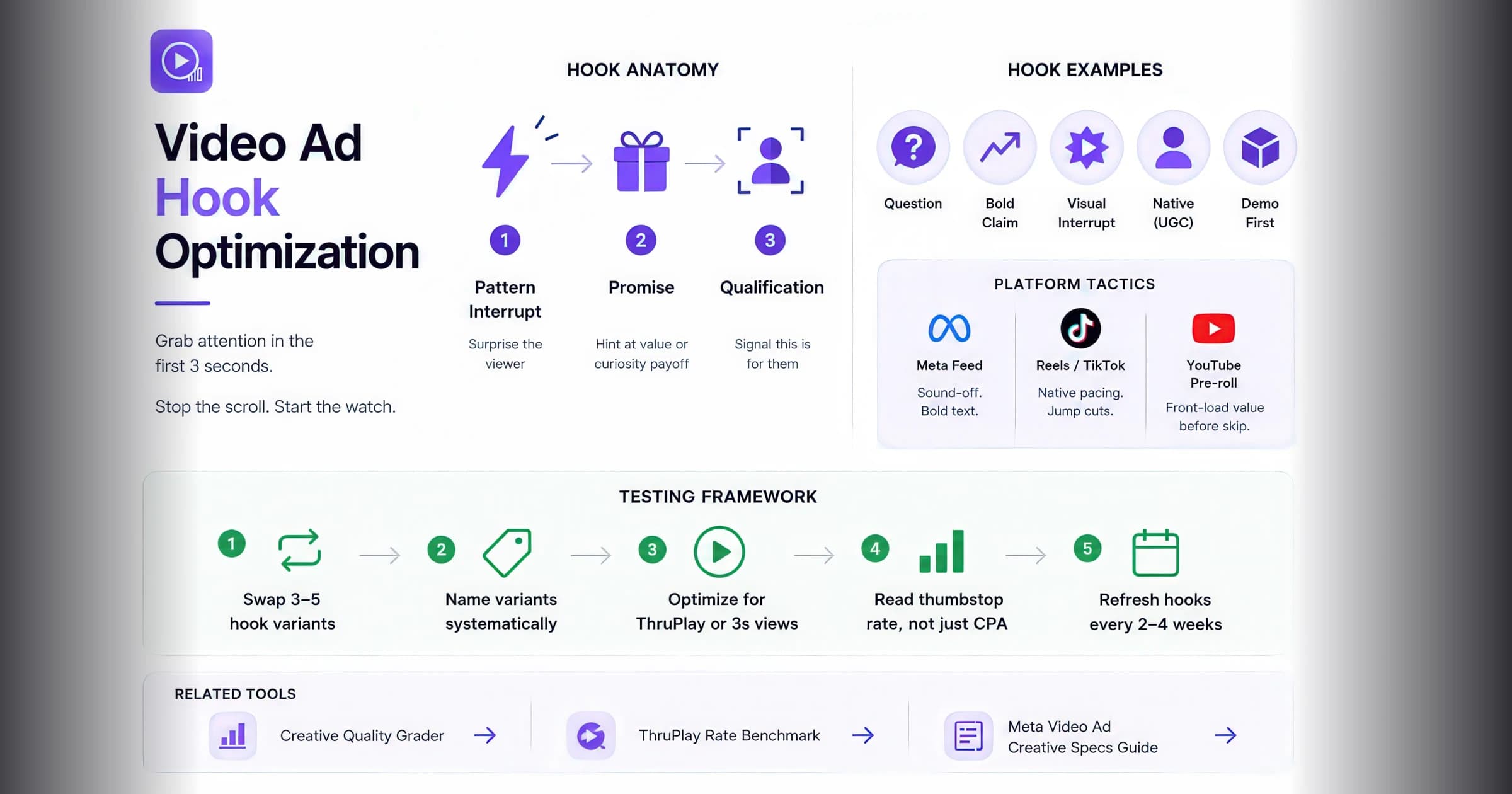
Video Ad Hook Optimization: Win the First 3 Seconds
Master the anatomy of high-performing video ad hooks — pattern interrupts, thumbstop tactics, platform-specific formats, and a repeatable testing framework for the first 3 seconds of your creative.
Quick takeaway
Win the scroll in under 3 seconds with a pattern interrupt, a clear promise, and audience qualification — then test hooks against the same body before scaling.
The Anatomy of a High-Performing Hook
Every strong hook does three things in under 3 seconds: interrupt, promise, and qualify.
A video ad hook is the first 1–3 seconds of your creative — the window that determines whether a scrolling user stops. Platform metrics capture this as thumbstop rate (3-second views ÷ impressions) and early hold rate curves.
Strong hooks follow a three-beat structure:
- Pattern interrupt — visual or auditory surprise that breaks the scroll
- Promise — a clear hint at the value or curiosity payoff
- Qualification — a signal that this ad is for the viewer ("if you run Meta ads…")
| Hook archetype | Example open | Works well when |
|---|---|---|
| Question | "Still guessing which ad creative wins?" | Problem-aware audiences |
| Bold claim | "We cut CPA 40% in 14 days" | Results-driven B2B/DTC |
| Visual interrupt | Unexpected object in frame / jump cut | Feed scroll environments |
| Native/UGC | Selfie-style talking head, no logo | TikTok, Reels, social-native |
| Demo-first | Product result shown in frame 1 | E-commerce, SaaS with visual product |
Platform-Specific Hook Tactics
What works in Meta Feed differs from Reels, TikTok, and YouTube pre-roll.
Meta Feed: Sound-off by default. Lead with bold on-screen text and high-contrast visuals in the first frame. Avoid logo slates — they burn your thumbstop window.
Meta Reels / TikTok: Full-screen, sound-on environments reward native pacing. Jump cuts, face-to-camera opens, and trending audio formats outperform polished brand intros.
YouTube pre-roll: Viewers expect to skip at 5 seconds. Front-load the value proposition — "In the next 15 seconds, you'll see…" — and show the payoff early.
Thumbstop target (Feed)
25%+
Pro prospecting benchmark
Hook test budget
5K impr/variant
Minimum before reading results
Hook refresh cadence
2–4 weeks
At scale, before fatigue drags thumbstop
Hook Testing Framework
A repeatable sprint for finding winning hooks without re-editing entire videos.
- 1
Keep one body, swap hooks
Edit 3–5 versions with different opens but identical body and CTA. This isolates hook performance from story and offer variables.
- 2
Name variants systematically
Use a naming convention: `ProductX_HookQuestion_v1`, `ProductX_HookDemo_v1`. You will accumulate dozens of hooks — naming prevents chaos.
- 3
Optimize for 3-second or ThruPlay
Use ThruPlay or video-view optimization during hook tests. Switch to conversion optimization only after identifying a winning hook to scale.
- 4
Read thumbstop, not just CPA
During hook tests, thumbstop rate and hold-at-3s are your primary metrics. CPA is noisy at low spend and will mislead you into killing strong hooks prematurely.
Free Tool
Creative Quality Grader
Score your video creative against engagement benchmarks including hook and retention metrics.
Key Takeaways
- Hook = pattern interrupt + promise + qualification in <3s
- Test hooks against the same body to isolate performance
- Platform format dictates hook style — Feed ≠ Reels ≠ YouTube
- Refresh hooks every 2–4 weeks at scale
Frequently Asked Questions
Related Tools & Guides

Creative Quality Grader
Grade your ad creatives and get actionable recommendations for improvement. This creative quality grader tool evaluates key elements like visual design, messaging, CTAs, accessibility, and platform optimization to help you create high-performing ads across Facebook, Instagram, TikTok, and YouTube. Get detailed scores and personalized tips to optimize your creative strategy.
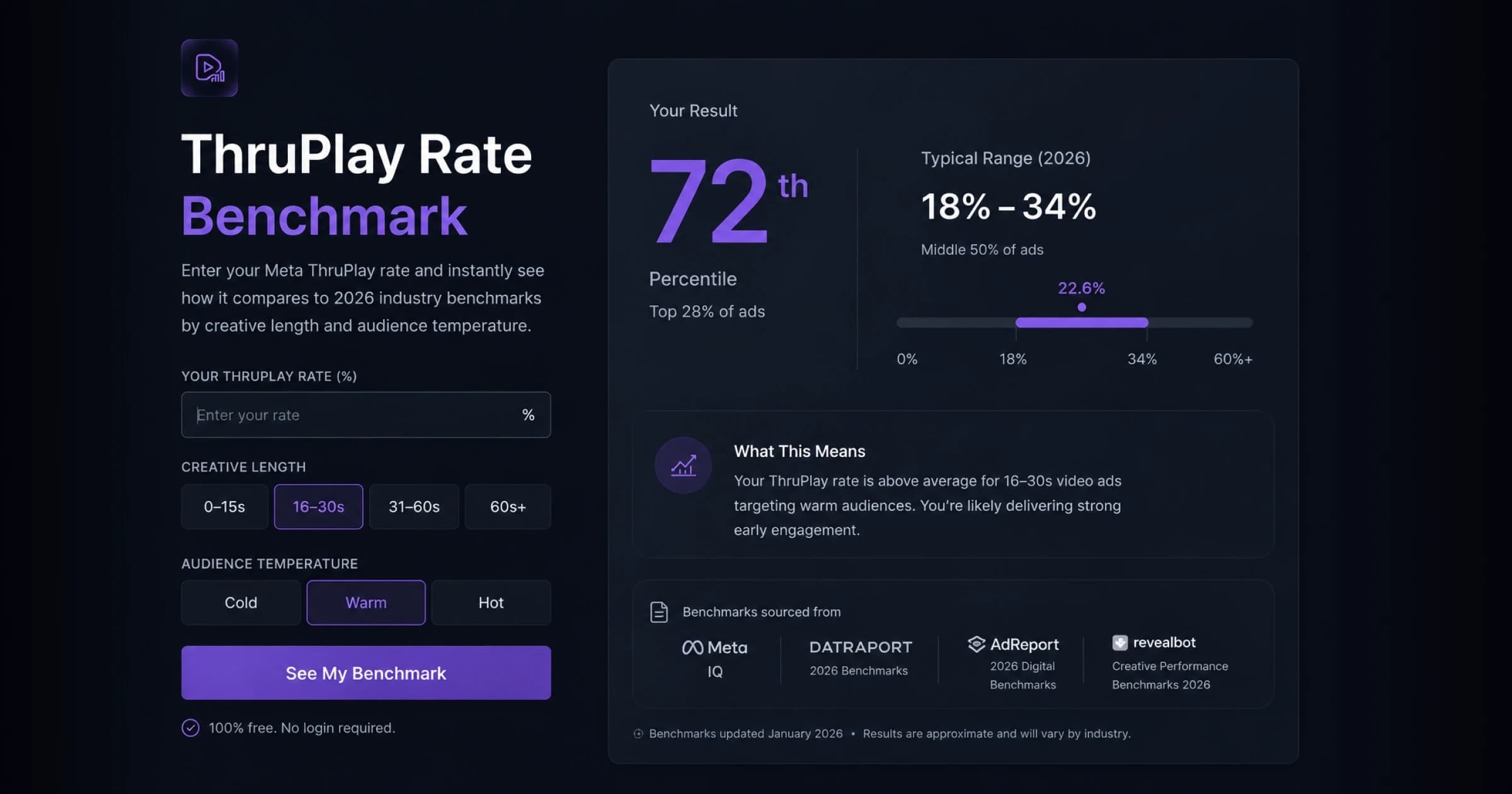
ThruPlay Rate Benchmark
Enter your Meta ThruPlay rate and instantly see how it compares to 2026 industry benchmarks by creative length and audience temperature. Free, no login — see where you land vs the cited typical range, with sources, and what your number means for creative performance.

Video Retention & Drop-Off Calculator
Analyze audience drop-off and retention to find exactly where viewers stop watching your videos. Works for YouTube, Vimeo, TikTok, and Facebook analytics data.
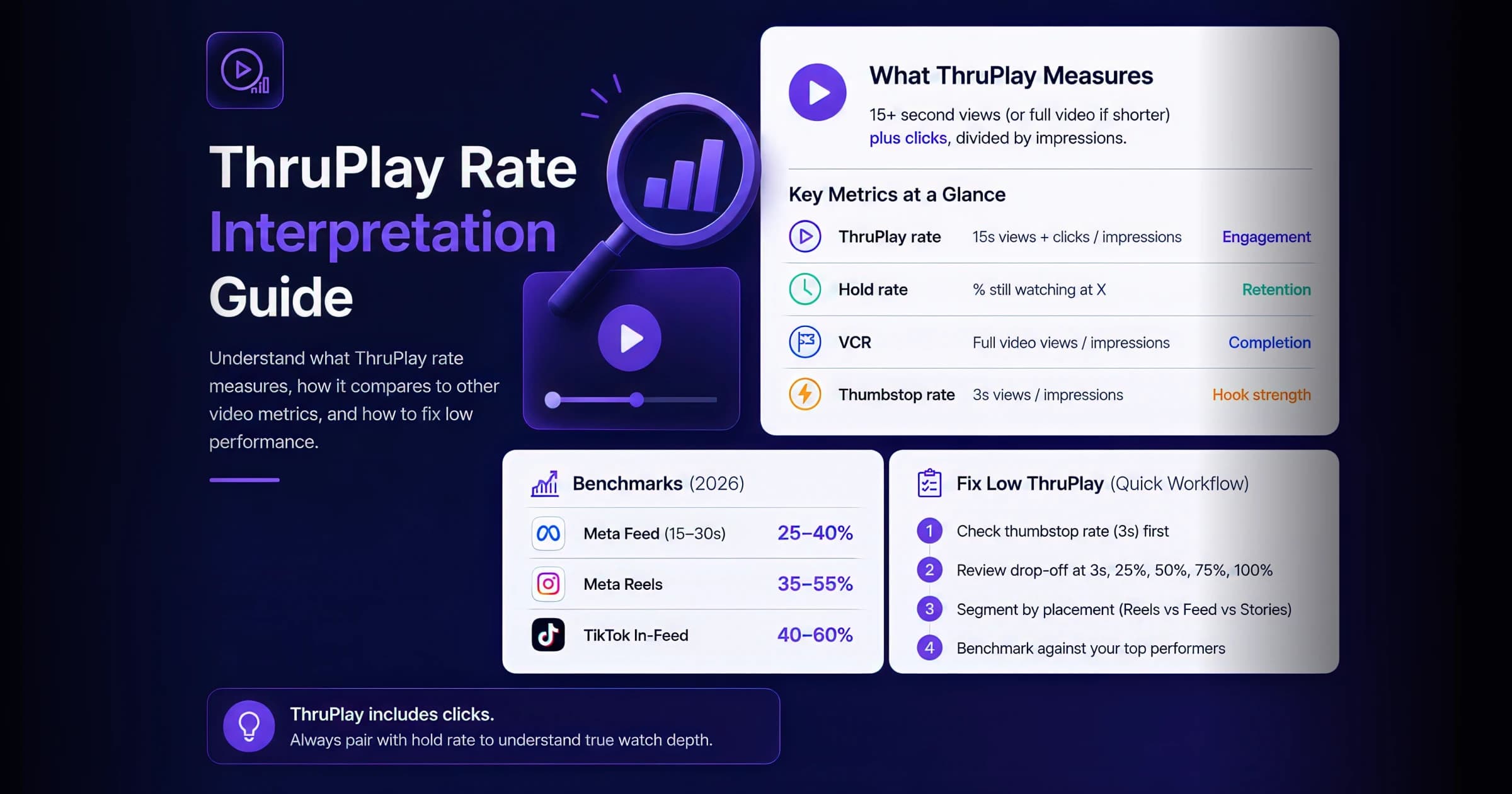
How to Interpret ThruPlay Rate (and When It Misleads You)
Understand what ThruPlay rate measures on Meta, how it differs from VCR and hold rate, when it misleads you, and a diagnostic workflow for underperforming video ads — with pointers to the canonical benchmark resources.
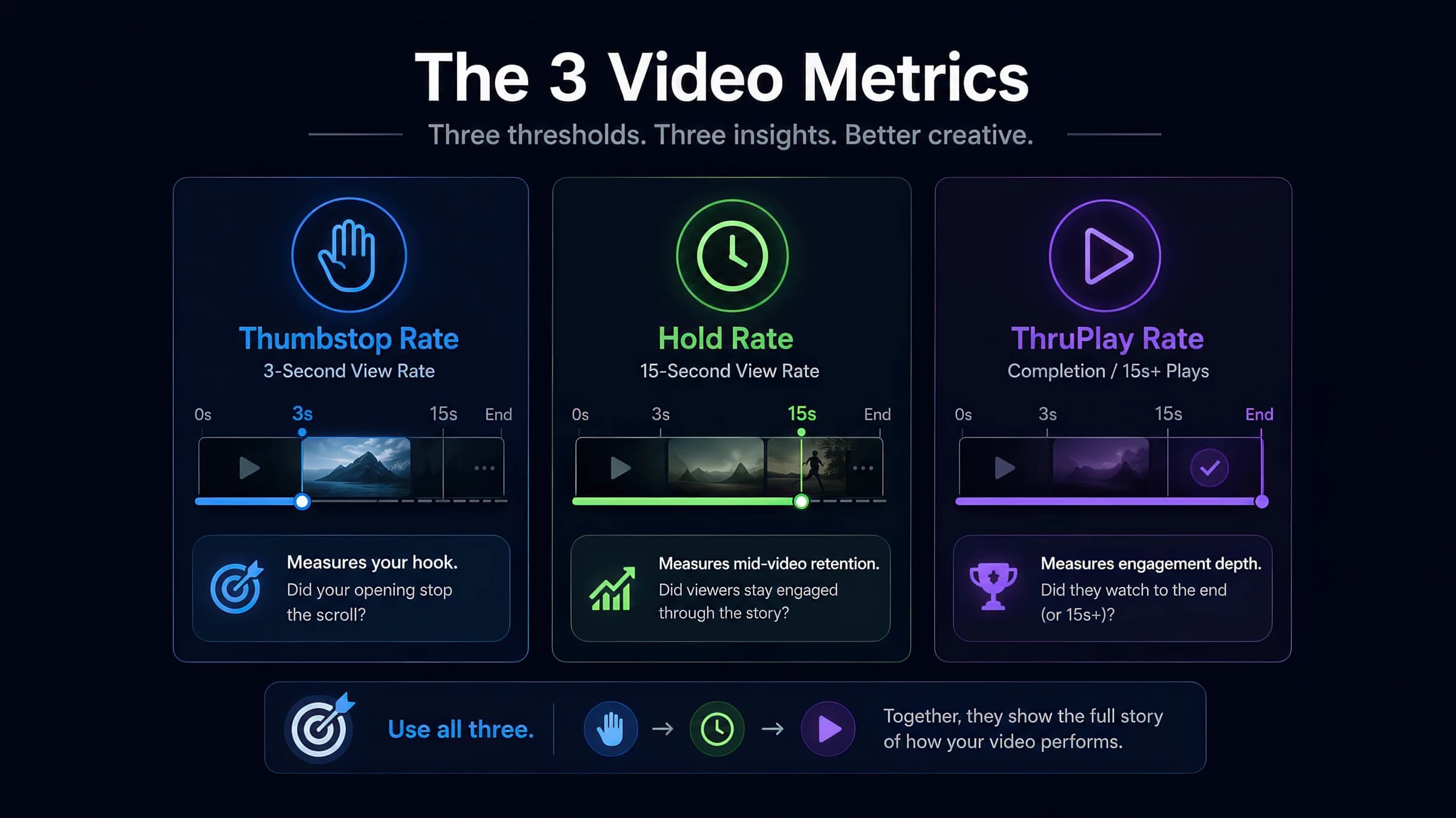
Video Creative Metrics Benchmarks 2026: Thumbstop, Hold & ThruPlay
Cited 2026 Meta ranges for thumbstop rate, hold rate, and ThruPlay — segmented tables, methodology, and free analyzers to score your creative.
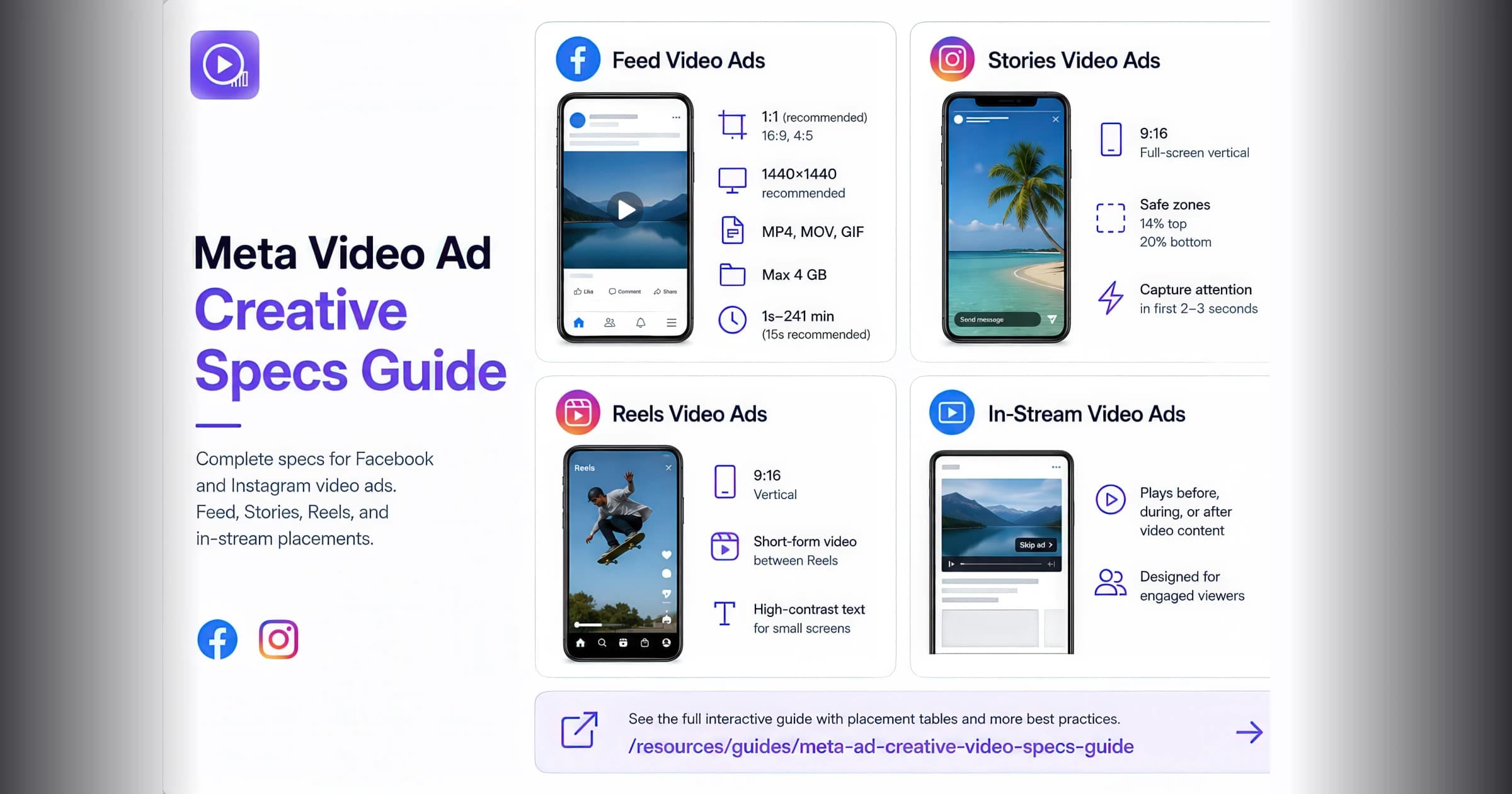
Meta Video Ad Creative Specs Guide
The complete guide to Meta video ad specifications and best practices. Learn the exact requirements for Facebook and Instagram feed ads, Stories, Reels, and in-stream video ads to maximize your creative performance.
